Quiz: Logo game
Lemmings at workTrivia
4.512.74K Reviews
- Version
- 9.22
- Installs
- 10.00M
- Age Rating
- Everyone
Screenshots
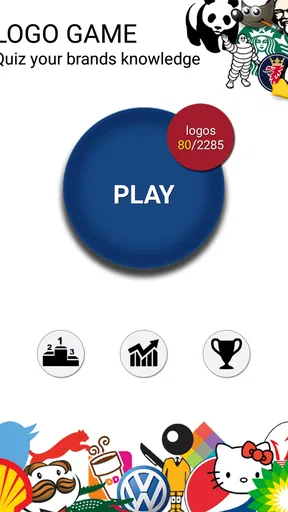
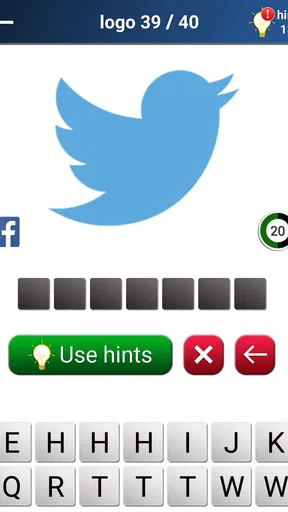
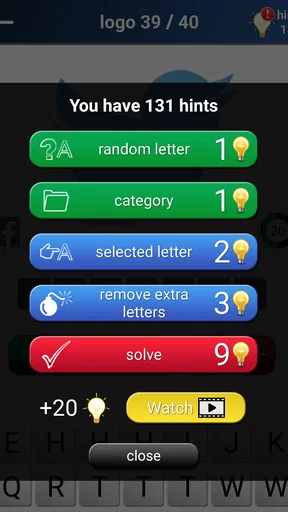
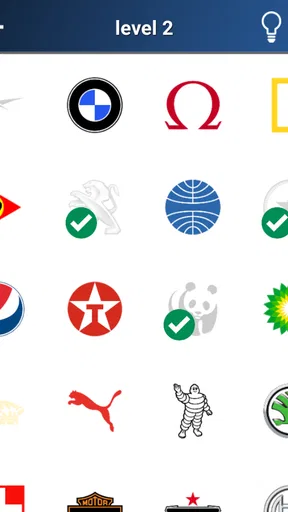
Our Review of Quiz: Logo game
 Analysis by Appyee
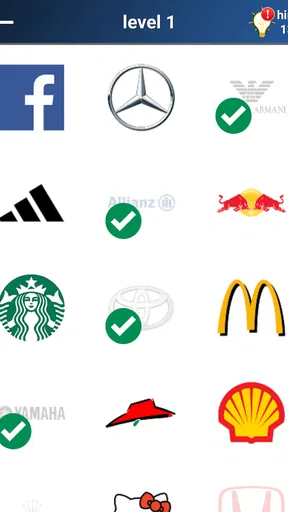
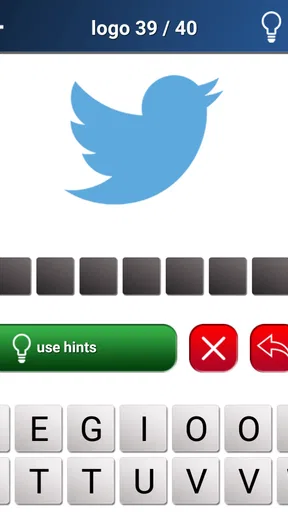
I like trivia games that let me start playing before I have to learn a complicated system, and Quiz: Logo game gets that part right. The first action is simple: a logo appears, I look for the visual clue I recognize, and I enter the brand name. That quick decision is the whole invitation. There is no long tutorial standing between curiosity and the next question.
This is a free logo-guessing game from Lemmings at work, listed in the trivia category for Everyone. Its scale is one of the main reasons it remains easy to return to: the game covers more than 2,600 brands worldwide, with a particularly large selection of American brands and dedicated American levels. The result is a familiar-looking game that can still surprise me when a symbol belongs to a market or industry I do not know well.
After spending time with it, I see the appeal clearly. It is not trying to replace a deep quiz platform or become a full social competition. It is a compact recognition challenge built around one satisfying question: can I identify this mark from only a partial visual memory? When I get one right, I want to test myself on another. When I miss one, I usually want one more attempt to repair my score.
How the logo-guessing loop works in practice
I find the logo-guessing loop works best when I treat each clue as a small observation task, not just a quick memory test. Before entering a name, I check which feature actually supports my guess; that habit helps separate genuine recognition from a color or shape that merely feels familiar. It also makes a missed answer more useful, setting up a closer look at what can make a session feel confusing.
The first action is immediate recognition
The strongest part of the design is how little preparation it demands. I can open the game with a few spare minutes and begin by examining a logo. That makes it suitable for a short break, a waiting room, or a casual round with someone nearby. The question is visual rather than text-heavy, so the opening seconds are spent searching memory instead of reading instructions.
That simplicity also creates the first meaningful trade-off. A logo may feel obvious because its shape, colors, or lettering is strongly associated with a brand, but recognition is not the same as being able to spell the answer correctly. I found that the game rewards careful entry as much as fast recall. If I rush because I am certain, a small spelling mistake can turn an easy-looking clue into an unnecessary setback.
I recommend treating each image as a collection of clues rather than staring at it as one object. I look first at the silhouette, then at the color arrangement, then at any remaining letter or symbol. This is more reliable than jumping immediately to the first brand that comes to mind. It also makes the game more interesting when the logo has been simplified or when several brands share a similar visual style.
The worldwide selection gives that first action more range than a quiz limited to the brands I see every day. The American levels are especially useful for players who want a focused run through familiar or culturally specific names. On the other hand, players outside the United States may find that some of those rounds rely on recognition they simply have not had a chance to develop. That is not a flaw in the idea, but it does change the difficulty from person to person.
Feedback keeps each answer moving
The feedback rhythm is the reason the game feels moreish. I make a guess, receive the result, and immediately have a reason to continue. A correct answer confirms that my visual memory was accurate. An incorrect one exposes a gap, and that gap becomes a small challenge I want to close. The response is valuable because it turns a vague feeling of familiarity into a definite result.
I do not experience the game as a slow examination. The individual decisions are short, but they are not completely empty. Before answering, I am weighing confidence: do I know the brand, or do the colors merely remind me of something else? That tiny internal debate is where much of the entertainment lives. The game works best when I answer from memory rather than immediately looking for outside help.
A useful habit is to separate recognition from confirmation. If I think I know a logo, I pause for a moment and identify the feature that led me there. Is it the shape, a distinctive letter, the color pairing, or the context I associate with the brand? This makes wrong answers more informative. Instead of simply learning that I missed, I learn which visual shortcut misled me.
The broad brand pool also prevents the feedback from becoming completely predictable. Some clues are likely to land instantly, while others depend on familiarity with a particular country, product area, or style of branding. That unevenness is healthy for a trivia game, although it can make a session feel less consistent than a carefully balanced quiz. I may move from an effortless answer to a logo I have never encountered, with no gradual bridge between them.
For that reason, I would not use this as a formal test of general knowledge. It measures exposure and visual recall as much as reasoning. Someone who spends a lot of time around advertising, shopping, technology, sports, or international media may have a noticeable advantage. I appreciate that honesty in the experience: the game is about recognizing brands, not proving broad intelligence.
The reward is progress through familiarity
The reward is not only the satisfaction of being right. It is the feeling that my mental catalog of symbols is becoming sharper. After a few rounds, I start noticing details that I would normally ignore in everyday life. A simple mark on packaging or a storefront becomes a potential quiz clue. That change in attention gives the game a small educational edge without turning it into a lesson.
Its free price makes this kind of experimentation easy. I can install it without deciding whether a substantial purchase is justified, and that matters for a lightweight trivia title. The game is also rated for Everyone, so it is an approachable choice for family play, provided the group is comfortable with the cultural differences in the brand selection. Younger players may recognize logos from their surroundings while adults may have an advantage with older or less frequently seen companies.
One of my favorite ways to use it is as a shared guessing game rather than a solitary score chase. I show a clue to someone else, let both of us commit to an answer, and then compare who noticed the decisive detail. This changes the reward from individual progress to conversation. One person may know the brand while another remembers where its logo appears, and the explanation is often more entertaining than the answer itself.
There is also a useful memory technique hidden in the reward cycle. When I miss a logo, I try to connect it to a concrete visual feature instead of memorizing only the name. For example, I might remember the unusual spacing, a particular outline, or the relationship between an icon and its lettering. That makes a later encounter more meaningful than simply repeating a word I happened to see once.
Still, the reward has limits. Players looking for elaborate unlock systems, character development, a story, or a competitive multiplayer structure may find the experience too narrow. Its pleasure comes from answering the next clue, not from building a larger virtual identity. I think that focus is a strength for short sessions, but it means the game will not satisfy someone who needs a strong long-term progression system.
Why another round begins
The session reset is handled by the basic appeal of unfinished knowledge. A correct answer gives me a small win, but an uncertain or missed answer leaves a loose thread. I begin another round because I want to know whether the next logo will be familiar, and because I want to recover momentum after a mistake. That is a more natural reason to continue than a forced countdown or an elaborate reward track.
This reset works particularly well when I have only a few minutes. I do not need to reserve a long block of time or remember a complicated campaign. I can stop after one clue or continue through a longer sequence, depending on my attention. That flexibility is one of the clearest differences between this game and trivia alternatives that expect a full match, a fixed quiz length, or a live opponent.
At the same time, the lack of a bigger structure can make the reset feel less meaningful for dedicated players. If I am in the mood for a ranked contest, timed pressure, or a detailed record of improvement, a more competitive quiz app would probably serve me better. Quiz: Logo game is strongest when I want a private, low-pressure test of recognition rather than a public performance.
I also found that the best stopping point is often after a satisfying correction. If I finally identify a logo that previously confused me, I feel I have completed a small learning loop. Continuing immediately can be fun, but stopping there leaves the session with a clear sense of progress. This is a practical way to avoid turning a short break into an aimless stretch of repeated guesses.
Where it fits beside other trivia choices
Compared with general trivia games, this one is much more visual and specialized. A broad quiz may ask about history, science, geography, entertainment, or current events, while this experience keeps returning to brand recognition. That narrower subject makes the game easier to pick up but also less varied. If I want to discover what I know across many school subjects, I would choose a general knowledge quiz instead.
Compared with crossword puzzles or word games, the challenge is less about constructing an answer from language and more about retrieving an image-name connection. That makes it a good alternative when I want something quicker and more instinctive. Word-game fans who enjoy layered clues and deliberate deduction may find the logo format too direct, while players who enjoy visual memory will probably appreciate the immediacy.
Compared with live quiz platforms, it is better suited to solo play and irregular attention. I do not need to coordinate with friends or wait for a scheduled round. The trade-off is that it does not create the same social pressure or excitement as answering against other people in real time. My recommendation depends on the mood: this is the one I would open for a quiet personal challenge, not for a party tournament.
The American focus is another point of comparison. A globally mixed logo quiz can broaden recognition, but it may also produce more clues that feel distant from a player’s daily life. The dedicated American levels offer a more concentrated route for people who specifically want that market. I would start there if the worldwide selection feels uneven, then return to the broader pool once I wanted more unfamiliar material.
Practical details before installing
The game has been available since July 19, 2015, and its continued presence is reflected in a current version of 9.22. It supports devices running Android 7.0 or later. Those details matter if I am installing it on an older phone or tablet, because compatibility is the first practical checkpoint before thinking about the content.
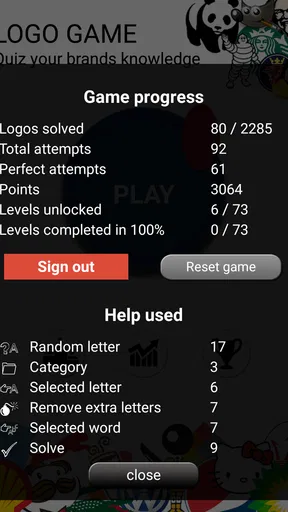
Its audience size also suggests that this is not an obscure experiment. It has passed ten million installs, with an average rating of 4.5 from around 438 thousand ratings and roughly 13 thousand written reviews. I treat those figures as useful context rather than a guarantee: a popular game can still be the wrong fit if I dislike brand-based questions or prefer more complex trivia mechanics.
The game is free, which makes it easy to try for a short period and decide based on the actual clue style. I would not install it expecting a full educational course or a replacement for a broad quiz library. I would install it because I want a focused visual challenge with enough variety to make recognition feel rewarding.
Who should play, and who should skip it
I recommend it to people who enjoy visual puzzles, casual trivia, and the small satisfaction of recognizing something before they can explain why. It is a particularly good fit for commuters, families looking for a simple guessing activity, and anyone who likes games that can be played in brief bursts. The low entry barrier also makes it suitable for introducing a younger player to trivia without beginning with difficult factual questions.
I would be more cautious if a player dislikes commercial imagery or feels that brand knowledge is too dependent on location and personal experience. Someone who wants every question to have a fair chance regardless of where they live may prefer geography, science, or history trivia. Likewise, players seeking deep strategy, a narrative, or a substantial competitive ladder should look elsewhere rather than expecting the logo format to grow into something it is not.
For mixed groups, I suggest treating unfamiliar clues as discussion points instead of judging them as failures. A player may know a logo because it is common in their country, while another may have never seen it. That makes the worldwide selection more enjoyable when the goal is sharing knowledge, but potentially frustrating when everyone expects identical difficulty.
My verdict on the complete loop
Quiz: Logo game succeeds because its loop is clean: I inspect a logo, commit to a name, receive immediate feedback, enjoy the small reward of recognition or correction, and start again because another clue is always tempting. Nothing in that sequence needs much explanation, and the simplicity is exactly why it works during short, ordinary moments.
The game is not the right choice for every trivia fan. Its subject is narrow, its difficulty can depend heavily on cultural exposure, and its long-term appeal comes from repetition rather than a complex progression system. Those are real limitations, not minor details. Yet they are also easy to understand before installing, which makes the free format valuable: I can test whether visual brand recall is the kind of challenge I enjoy.
My overall recommendation is positive. The combination of worldwide coverage, focused American levels, quick answers, and a large collection of recognizable and less familiar marks gives the game more staying power than its simple premise suggests. If you want a relaxed logo quiz that invites one more attempt without demanding a long commitment, Quiz: Logo game is worth trying. I would keep it available for those moments when I want trivia that begins instantly and ends on my own terms.
Verdict
Strengths of Quiz: Logo game
- Hundreds of familiar logos make it easy to start playing immediately.
- Short levels are ideal for quick sessions during breaks or commutes.
- Hints help players progress when a logo is difficult to recognize.
- Simple controls and clean visuals suit both casual and younger players.
- Guessing brands can improve visual memory and recognition skills.
Limitations of Quiz: Logo game
- Some logos may be region-specific and unfamiliar to international players.
- Repeated logo styles can make later levels feel less varied.
- Hints and extra attempts may be limited without watching advertisements.
- Brand updates can leave certain logos looking outdated over time.
- The game offers limited depth for players seeking strategy or competition.
Similar Picks in This Category
View All
Millionaire 2026 Quiz & Trivia
Quiz & Trivia Games by Submarine Apps4.5

Brain Test 2: Tricky Stories
Unico Studio4.7

Trivia Crack: Brain Quiz Games
etermax4.4

QuizzLand. Quiz & Trivia game
Quiz & Trivia Games by Mno Go Apps4.8

Brain Test: Tricky Puzzles
Unico Studio4.7

Logo Quiz
bubble quiz games4.5
Frequently Asked Questions
What is Quiz: Logo game and how does it work?
Quiz: Logo game is a casual trivia app that challenges you to identify company logos from visual clues. Each level displays a logo, or part of one, and you select the correct brand from the available answers. As you progress, the puzzles generally become more difficult, making the game suitable for short sessions as well as longer rounds of brand-guessing entertainment.
Is Quiz: Logo game free to download and play?
The game can generally be downloaded and played without an upfront purchase, although the exact availability of free levels and features may depend on the version installed and your device’s app store. Like many free quiz games, it may include advertising, optional hints, or in-app purchases. Check the store listing before downloading to review current pricing and purchase details.
Does Quiz: Logo game require an internet connection?
An internet connection may be needed for downloading the game, displaying advertisements, synchronizing progress, or accessing certain updated content. However, basic logo questions may remain playable offline after the required game data has been installed. Offline behavior can vary between Android and iOS versions, so users who want to play without mobile data should test the app in airplane mode first.
Is Quiz: Logo game suitable for children?
Quiz: Logo game is generally easy to understand and does not require advanced reading or gaming skills, which can make it appealing to children, families, and casual players. Nevertheless, parents should check the age rating, advertising content, privacy information, and any in-app purchase options. Some logos may also be unfamiliar to younger players, depending on their region and experience.
What should I do if I get stuck on a logo question?
If a logo is difficult to recognize, use the available hints if the game provides them. Hints may reveal letters, remove incorrect answers, or show more of the image, although they can require earned coins or another in-game resource. You can also skip a question when that option is available and return to it later after gaining more knowledge or resources.
Play our best games!


